

Research Theme #5
Coupling Earth Sciences, Economics and Environmental Governance to Tackle Anthropogenic Stressors
Keywords: Ecosystem, Governance, Earth Sciences, Economics, Policy Instrument Design


Workshop Leaders (PIs)

Gerdhard Jessen
Universidad Austral de Chile
gerdhard.jessen@uach.cl

Daniel Slunge
University of Gothenburg
daniel.slunge@gu.se
Research Theme Summary
Recent decades have seen increasing awareness of the detrimental impacts of both natural and human-derived stressors on global biodiversity. While Earth science is focused on characterizing ecosystem trajectories, this scientific vision is frequently decoupled from regulatory, economic, and social realities. This Research Theme (RT) establishes a new interdisciplinary collaboration to bridge this structural divide. By combining biogeochemical evidence with empirical behavioral data, choice metrics, policy analysis, environmental governance, and policy design, this RT brings together natural science, environmental economics, and other social science perspectives. Furthermore, we will explore how technological advances, including Artificial Intelligence (AI), can drastically enhance both environmental monitoring programs and policy design. This integrated framework effectively translates empirical ecological data into actionable regulatory realities. PhD students and early-career researchers from Chilean and Swedish member institutions will apply this framework to shared bilateral challenges, analyzing how ecosystem-level biogeochemical thresholds translate into effective environmental policies. Through this comparative approach, the workshop aims to lay the groundwork for long-term, cross-disciplinary research lines, initiate discussions on potential joint publications, and explore possibilities for co-supervised PhD tracks spanning earth sciences and relevant social science disciplines, including economics, law, and political science.
Desired Expertise
Earth and environmental sciences: including biogeochemistry, environmental contamination, ecotoxicology, ecology, biology, and microbiology, in both aquatic and terrestrial systems.
Environmental economics: including policy instrument design, economic valuation, and market-based mechanisms for chemical risk management.
Environmental policy, law, governance, and behavioral sciences: including political science, environmental and regulatory law, risk analysis, risk perception, and behavioral approaches to environmental decision-making and compliance.
Join this Workshop.
About the ACCESS Forum & Research Themes (RTs)
-
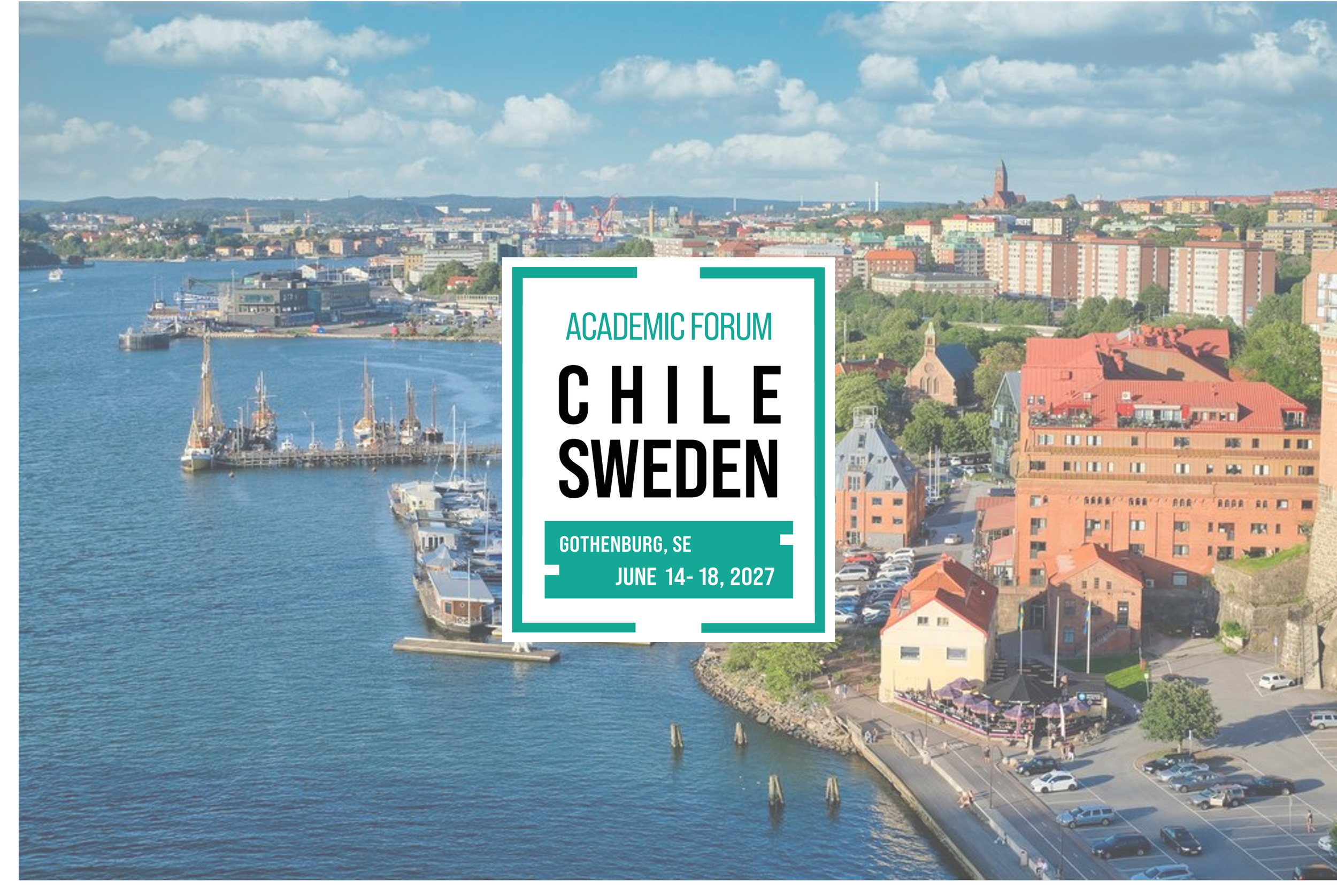
The ACCESS Forum is an immersive, bi-national event held every 18 months that connects scholars across Chilean and Swedish member universities to address global societal challenges. Rather than functioning as a standard academic conference with passive presentations, an ACCESS workshop operates as an intensive, dedicated "working laboratory."
Participants commit to a single Research Theme (RT)—a targeted, co-led scientific initiative aligned with the ACCESS Research Framework. Over four days of collaborative work sessions, interactive discussions, and co-design activities, participants remain with the same cohort to move research ideas from concept to action.
-
By joining our workshop cohort at the upcoming ACCESS Forum, you will:
Co-Develop Concrete Outcomes: Work directly toward joint academic publications, collaborative grant proposals (e.g., ANID, STINT, Horizon Europe), co-supervision of PhD candidates, etc.
Cross-Contextual Insights: Exchange datasets, methodologies, and local perspectives between Chilean and Swedish contexts.
Expand Your Network: Connect with senior researchers, Early Career Researchers (ECRs), and non-academic stakeholders across both research and innovation ecosystems.
-
To apply for a seat in this Research Theme workshop, please review the desired expertise above and complete the application form before the registration deadline.
IMPORTANT: Applications from ACCESS member universities will be prioritize.Apply here by 1 November 2026: XXX